
A helmet is like a turtle’s shell – for your head – however, unlike a turtle you have options, how can you possibly pick?
Lids are the pinnacle of riding safety, not just because it’ll save your noggin when you need it, because the law requires it. The law is hot hot hot on helmets and if you’re not not not wearing one you may be in trouble – with the police and the pavement if you’re in an accident.
Fingers crossed it won’t come to that. So whether you’re a new or seasoned rider, a café racer enthusiast or superbike speed junkie, it’s important to understand the decision guiding your purchasing choice. Of course, many may hope for an answer to the simple question ‘which is the best helmet?’ Ask a simple question, you get a simple answer – there isn’t one.
You have to maze through the myriad of options and find the best helmet for you, accounting for factors such as budget and your style of riding – some lids may perform better with higher impact collisions than soft falls. Though it is the inner liner which often absorbs most of this shock, the shell contributes to this, protects against abrasion and affects the overall weight. Of course, the shell also carries the fierce style.
Carbon Helmets? Fibreglass Helmets? What are the options?
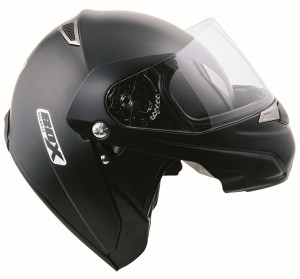 Box begin at the end of the price and quality spectrum with synthetic polycarbonate shells. It’s often considered that cheaper results in cheerful, does that also translate to safe? An old motorcycle magazine in 2005* tested two helmets, and the polycarbonate transfered less energy to the riders head than the Kevlar / fibreglass composite, it isn’t black and white but the result challenges the argument of higher price equating to improved safety.
Carbon builds bicycles, helped Edison to create filaments in the first light bulb and shells many motorcycle helmets. Often opined as the holy grail of helmet shell materials, carbon is a popular choice. Why? A Carbon helmet is lightweight, strong and a handsome helmet material. Carbon is five times stronger than steel on an equal weight basis, two times as stiff and weighs less. The naturally sleek look of Carbon draws riders in, as with the Caberg Ghost Carbon, this nature is often preserved over time being inherently scratch and crack resistant. It also reduces noise pollution to reduce your chance of hearing loss, and provides abrasion resistance.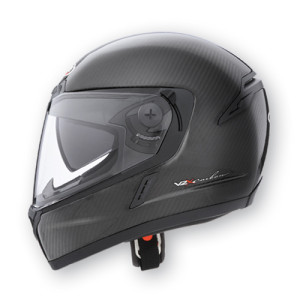
Along the same price and highly sought after lines as a carbon helmet, we introduce fibreglass. Often disregarded in favour of its tougher alternative, fibreglass isn’t as strong but makes up for this in flexibility. It can bend and withstand more strain, whilst absorbing and dissipating impact energy efficiently. So perhaps the obvious option isn’t always the road to ride.
Some shells aren’t so singular in their creation. Tricomposite blends together fibre glass, Kevlar and Carbon. Kevlar, often used for its abrasion-resistance in motorcycle jeans; light, strong and withstands high temperatures. Kevlar is used in the Caberg Drift Helmet‘s construction and provides the benefits of each material. The same goes for the more advanced AIM+, the construction forms part of helmets such as the Shoei X-Spirit 3. This is built with six layers of carbon fibre / organic fibres and fibreglass.
How much are you shelling out?
The prices are scattered across a smattering of brands, colours, styles and riding choices. You can part with £79.99 for a Spada flip-front helmet, £999.99 for a AGV Pista GP-R Rossi Soleluna race lid or choose from a broad selection of other helmets priced at various levels in between. There are many more factors to consider, as are covered in our recent helmet buying guide or slightly older, but still informative guide. It may pay, not only financially, to rummage around for more information before buying, especially as this may last you years**, and increase your years of riding if you stay safe.
Have we answered your questions?
If you’re leaving this post with more questions than you began your research with, please call us for a chat, put it in writing or come to our showroom and impress pur stores staff with your questions.
**This varies depending on the amount of use and the condition of the helmet’s inside. However, the rule we go by is 2-3 years of everyday use for a polycarbonate, 5 years of everyday use for a tricomposite / carbon helmet. Please come into stores or give us a call for further advice.
